Food & culture
Moroccan Food Guide: Classic Dishes and How Moroccans Eat
Moroccan food is built on slow-cooked tagines, Friday couscous, cooked salads, fresh bread and sweet mint tea, flavoured with spices such as cumin, saffron, ginger and cinnamon rather than heavy chilli heat. The best way to taste it is at home-style tables – a riad dinner, a family meal or a cooking class – as well as in restaurants and, for snacks, at street stalls.
What makes Moroccan food distinctive
Moroccan cooking draws on Amazigh (Berber) traditions, Arab spice routes, Andalusian refinement and, more recently, French influence. The result is a cuisine that balances sweet and savoury – lamb with prunes, chicken with honeyed onions – and uses spices for warmth and fragrance rather than fire.
Key flavours include cumin, ginger, saffron, turmeric, cinnamon and sweet paprika, often blended as ras el hanout (literally “head of the shop”, the merchant’s best mix). Preserved lemons, olives, fresh coriander and flat-leaf parsley, argan oil in the south and smen (aged butter) give dishes their character.
The classic Moroccan dishes to try
Tagine
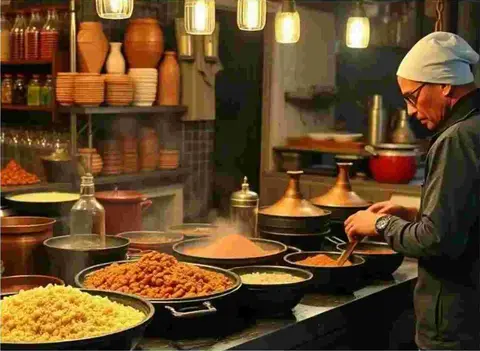
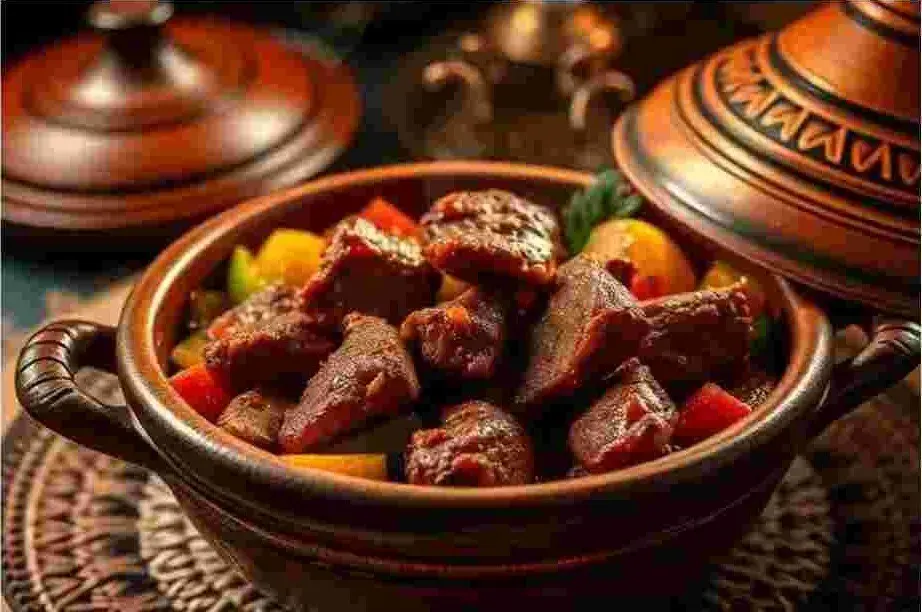
Tagine is the name of both the conical clay pot and what is cooked in it. The lid traps steam, which condenses and drips back, so meat and vegetables cook slowly in their own juices. Classic versions include chicken with preserved lemon and olives, lamb or beef with prunes and almonds, kefta (meatballs) with eggs in tomato sauce, and seasonal vegetable tagines. Tagines are traditionally eaten with bread rather than couscous.
Couscous
Real couscous is steamed several times over a stew in a couscoussier until each grain is light and separate. It is traditionally the Friday lunch, shared from a single platter after midday prayers, topped with seven vegetables and lamb, beef or chicken. A sweet version, tfaya, adds caramelised onions and raisins. Many restaurants serve couscous only on Fridays, so ask.
Pastilla (bastilla)
A Fes speciality and a festive dish, pastilla wraps spiced pigeon or, more often today, chicken with almonds and egg in paper-thin warqa pastry, finished with icing sugar and cinnamon. Seafood pastilla with vermicelli, prawns and fish is popular on the coast.
Tanjia
Marrakech’s signature dish is a tall clay urn of beef or lamb with preserved lemon, cumin, saffron and smen. Traditionally, men prepared it and left it to cook slowly for hours in the embers of a hammam furnace. You will find it in small restaurants near the souks and in some riads by request.
Harira
A thick soup of tomatoes, lentils, chickpeas, herbs and sometimes a little meat, harira is eaten all year but is central to Ramadan, when it breaks the daily fast with dates and chebakia (honeyed sesame pastries).
Rfissa, mechoui and medfouna
Rfissa – shredded msemen flatbread with chicken, lentils and fenugreek – is a celebratory dish, traditionally served to new mothers. Mechoui, whole lamb roasted slowly, appears at weddings and feasts. In the south-east, around Rissani and Merzouga, look for medfouna, a flatbread stuffed with spiced meat, onions and egg, often called “Berber pizza”.
Salads, bread and breakfast
A Moroccan meal often starts with a spread of cooked salads: zaalouk (smoky aubergine and tomato), taktouka (peppers and tomato), carrots with cumin, beetroot, lentils. They are scooped up with khobz, the round bread baked daily, often in a neighbourhood oven.
Breakfast in a riad typically includes msemen (square flaky pancakes), baghrir (spongy semolina pancakes with tiny holes), khobz, olive oil, honey, amlou (a spread of almonds, argan oil and honey), eggs, fresh orange juice and mint tea or coffee.
Regional specialities
| Region | What to try |
|---|---|
| Fes | Pastilla, refined tagines, Fassi pastries |
| Marrakech | Tanjia, mechoui near the souks |
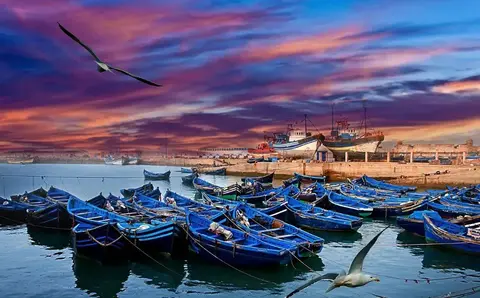
| Essaouira and the coast | Grilled sardines and fish at the port, seafood pastilla |
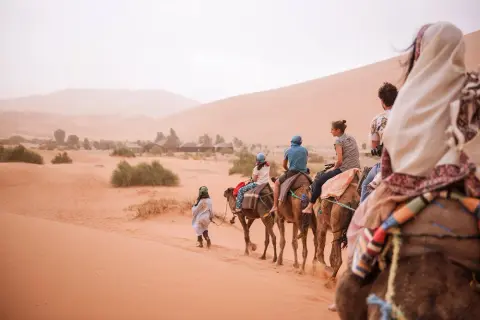
| Sahara (Merzouga, Rissani) | Medfouna, tagines cooked over embers at camp, dates |
| High Atlas | Hearty Berber tagines, walnut and apple dishes, mountain honey |
| Souss and Agadir | Argan oil, amlou, couscous with barley |
| The north (Chefchaouen, Tetouan) | Bessara, goat’s cheese, Andalusian-influenced dishes |
Travelling across the country is the easiest way to taste these differences. A route such as the 10-day tour from Fes passes through Fes, the Sahara, Marrakech and the north, while on the 3-day desert tour from Marrakech dinner is served at the camp in the dunes.
Mint tea and other drinks
Atay, Moroccan mint tea, is green gunpowder tea brewed with fresh mint and plenty of sugar, then poured from a height to create a little foam. Offering tea is the basic gesture of hospitality, in homes, shops and even at roadside stops. It is polite to accept at least one glass. Ask for “shwiya sukar” if you would like less sugar.
Other favourites include coffee with milk (nous-nous, “half-half”), fresh orange and avocado juices, and in winter, herbal infusions with wormwood (sheeba) or verbena. Alcohol is available in licensed hotels and restaurants, but it is not part of everyday Moroccan dining.
Dining etiquette: how Moroccans eat
- Wash your hands: a host may bring a basin and kettle (tass) to the table before the meal.
- Right hand only: eat with your right hand, using bread as a scoop. The left hand is considered unclean for eating.
- Eat from your section: with a shared dish, take food from the part in front of you. The host may push the best pieces of meat towards guests.
- Pace yourself: hospitality is generous, and you will be encouraged to keep eating. Saying “alhamdulillah” (praise be to God) signals you are full.
- Bread is respected: do not throw it away carelessly; leftovers are often given to others or animals.
- Ramadan: during daylight hours, avoid eating in public in non-touristy areas. Joining an iftar (the evening meal that breaks the fast) is a memorable experience if invited.
Vegetarians, vegans and special diets
Vegetarian travellers eat well in Morocco: cooked salads, vegetable tagines and couscous, bessara, lentils, omelettes and plenty of fruit. The main risk is hidden meat stock or smen in vegetable dishes, so explain clearly – “bla lham” means without meat. Vegans should also ask about butter and honey. Gluten-free travellers need to be careful, as bread and couscous are at the heart of most meals; rice-based alternatives are less common.
If you are booking a tour, mention any dietary needs when you enquire so they can be shared with the riads and camps on your route.
Where to eat
Riad dinners and family-run restaurants are where home-style cooking shines. Upmarket restaurants in Marrakech and Fes serve refined versions of classic dishes in palace settings. For snacks, grills and soups, the stalls of Jemaa el-Fna and the medina lanes are unbeatable – our Morocco street food guide covers what to order and how to choose a stall.
Frequently asked questions
What is the national dish of Morocco?
Couscous is generally considered Morocco’s national dish and is the traditional Friday meal, though tagine is equally iconic and far more common on everyday menus. Both are shared from a central dish. Couscous is steamed semolina topped with vegetables and meat, while tagine is a slow-cooked stew named after its conical clay pot.
Is Moroccan food spicy?
Moroccan food is aromatic rather than hot. Most dishes use cumin, ginger, saffron, cinnamon and sweet paprika for warmth and fragrance, with little chilli. If you like heat, ask for harissa or a hot pepper sauce, which is often served on the side, especially with grilled meats, fish and bessara.
What is the difference between tagine and couscous?
A tagine is a stew slow-cooked in a conical clay pot and usually eaten with bread. Couscous is fine semolina steamed over a stew and served as a mound topped with vegetables and meat. Tagine is everyday food; couscous is traditionally the Friday family lunch and a dish for gatherings and celebrations.
Is it rude to refuse mint tea in Morocco?
It is not offensive, but accepting at least one glass is the polite norm, as tea is the basic gesture of hospitality. If you do not want sugar, ask for less, or simply take a few sips. Shopkeepers may offer tea while you browse; accepting does not oblige you to buy anything.
Can vegetarians eat well in Morocco?
Yes. Vegetable tagines and couscous, cooked salads such as zaalouk and taktouka, bessara, lentils, eggs, bread and fresh fruit are widely available. The main issue is meat stock or smen in some vegetable dishes, so state clearly that you do not eat meat. Vegans should also ask about butter and honey.
Published · Updated