Destinations
Tangier and Chefchaouen: A Guide to Northern Morocco
Northern Morocco is the region between the Strait of Gibraltar and the Rif mountains, centred on the port city of Tangier and the blue mountain town of Chefchaouen, about 115 km (2 hours) apart. With three to five days you can combine Tangier, the Atlantic town of Asilah, the Andalusian-style medina of Tetouan and Chefchaouen, before heading south to Fes or the Sahara.
Northern Morocco at a glance
The north feels different from Marrakech and the south. The Rif mountains are green and forested, the coast faces both the Atlantic and the Mediterranean, and centuries of contact with Spain have left their mark on architecture, food and language. Tetouan and much of the region were part of the Spanish protectorate until 1956, and Tangier had a period as an international zone.
| Place | Distance from Tangier | Character | Time to allow |
|---|---|---|---|
| Tangier | – | Port city, kasbah, cafés, literary history | 1–2 days |
| Asilah | 45 km, 45 minutes | Whitewashed seaside medina, murals, beaches | Half day to 1 night |
| Tetouan | About 60 km, 1 hour | Andalusian-style medina, crafts | Half day |
| Chefchaouen | 115 km, 2 hours | Blue mountain town, hiking | 1–2 nights |
| Akchour (Rif) | About 30 km beyond Chefchaouen | Waterfalls, rivers, God’s Bridge | Half day |
Tangier: Morocco’s gateway city
Facing Spain across the Strait of Gibraltar, Tangier has been fought over by Phoenicians, Romans, Portuguese, English and Spanish. From 1923 to 1956 it was an international zone, attracting writers, artists and adventurers – Paul Bowles, William S. Burroughs and the painter Henri Matisse, who stayed earlier in the century, are all linked to the city. Today it is a fast-growing modern city with a restored medina and seafront.
The Kasbah and medina
The Kasbah sits on the highest point of the old city. Its former sultan’s palace, Dar el-Makhzen, houses the Kasbah Museum, and terraces nearby look across the strait to Spain on clear days. Below, the medina winds down to the port, with the Petit Socco – once the city’s café hub – at its heart. The American Legation, the first property owned by the United States abroad, is now a museum of the city’s cosmopolitan history.
Grand Socco and the new town
The Grand Socco square links the medina with the new town, where Boulevard Pasteur and the Terrasse des Paresseux offer views of the harbour. Cinéma Rif, on the square, is a cultural landmark and café.
Café Hafa
Open since 1921, Café Hafa is a series of simple terraces stepping down a cliff above the sea. It is a place for mint tea and the view, not for food or service, and is particularly popular at sunset.
Cap Spartel and the Caves of Hercules
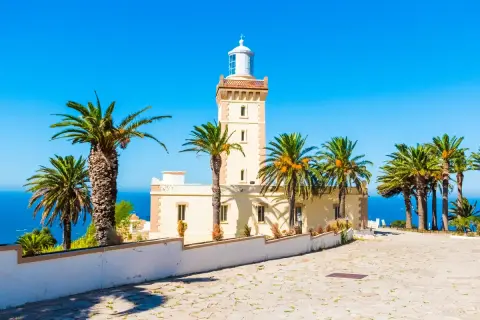
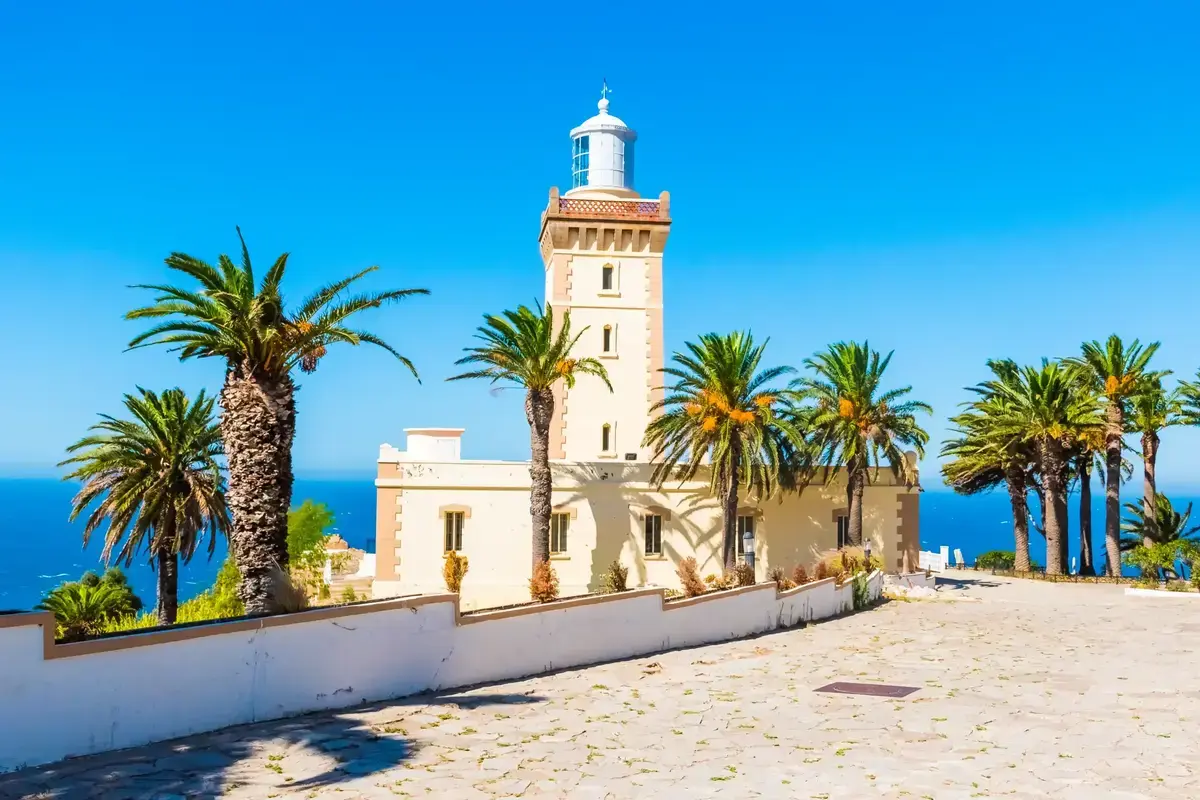
About 14 km west of the city, Cap Spartel is the north-western tip of Africa, where the Atlantic meets the entrance to the Strait. A short drive south, the Caves of Hercules are linked to legends of the hero resting here; the cave’s sea-facing opening is often said to resemble the outline of Africa.
Chefchaouen: the blue town of the Rif
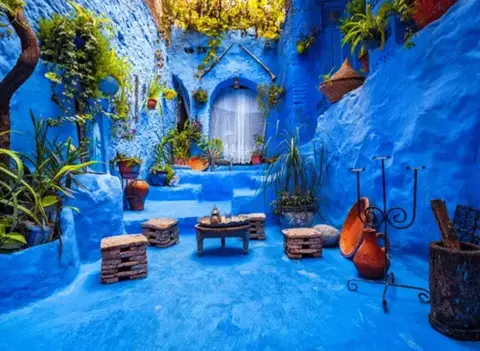
About two hours south-east of Tangier, Chefchaouen sits beneath the peaks of the Rif. Its medina, washed in shades of blue, is compact and calm, and the town is a base for walks in the Talassemtane National Park, including the trail to the Akchour waterfalls. One or two nights is ideal.
For a detailed look at the town – why it is blue, the Spanish Mosque viewpoint, where to stay and how many days to spend – read our dedicated Chefchaouen travel guide.
Asilah, Tetouan and the coast
Asilah
This small Atlantic town 45 km south of Tangier has a whitewashed medina inside Portuguese-era walls, with murals painted by artists during its summer arts festival. It is relaxed, with good fish restaurants and beaches to the south. It makes a pleasant stop between Tangier and Rabat.
Tetouan
Tetouan’s medina, a UNESCO World Heritage Site since 1997, was rebuilt by refugees from Andalusia in the late 15th century and keeps a distinctly Andalusian feel, with whitewashed lanes and a traditional crafts school. It is far less visited than Fes or Marrakech and sits on the road between Tangier and Chefchaouen.
The Mediterranean coast
East of Tetouan, the Mediterranean coast has beaches popular with Moroccan families in summer, such as Martil and M’diq. Further east, Al Hoceima has some of the clearest water in the country but is a longer drive through the Rif.
Getting to northern Morocco
From Spain by ferry
Fast ferries from Tarifa arrive at Tangier’s city port in roughly an hour, which makes day trips from southern Spain possible. Ferries from Algeciras usually arrive at Tanger Med, about 40–50 km east of the city, so allow extra time for the transfer. Check current schedules, which vary with season and weather in the strait.
By air and rail
Tangier Ibn Battouta Airport has flights from many European cities. The Al Boraq high-speed train connects Tangier with Rabat and Casablanca in a few hours, with onward trains to Fes and Marrakech.
Between Tangier and Chefchaouen
The drive takes about two hours via Tetouan. CTM and other buses run daily; a private driver allows stops in Tetouan or at viewpoints in the Rif.
Suggested routes through the north
- 3 days: Tangier (1 night), Chefchaouen (2 nights) with a stop in Tetouan.
- 5 days: Tangier and Asilah (2 nights), Tetouan, Chefchaouen (2 nights) and Akchour, then on to Fes.
- A week or more: add Fes and the Sahara, finishing in Marrakech.
Many travellers start in Tangier and head south. The 5-day desert tour from Tangier takes in Chefchaouen and Fes before the Sahara and ends in Marrakech, while the 7-day tour from Tangier and the 9-day itinerary from Tangier allow more time in each place. The longer 16-day Morocco tour also includes Asilah and Tetouan.
Practical tips for the north
- When to go: April to June and September to October. Summers are warm and busy on the coast; winter brings rain, especially in the Rif.
- Language: Spanish is widely understood in Tangier, Tetouan and Chefchaouen.
- Dress: the Rif is more conservative than Marrakech; cover shoulders and knees. See what to wear in Morocco.
- Cannabis: offers of hashish are common in parts of the Rif. Decline politely – recreational use is illegal.
- Money: carry cash for small towns; ATMs are easy to find in Tangier and Tetouan.
Frequently asked questions
How far is Chefchaouen from Tangier?
Chefchaouen is about 115 km from Tangier, roughly two hours by road via Tetouan. Buses run daily, and a private driver or tour lets you stop in Tetouan’s UNESCO-listed medina on the way. Because the journey is short, many travellers combine a night in Tangier with one or two nights in Chefchaouen.
Is Tangier worth visiting?
Yes, Tangier is worth at least a night. Its restored kasbah, medina and seafront, cafés with views of Spain and literary history make it very different from other Moroccan cities. It is also the natural starting point if you arrive from Spain, and an easy base for Asilah, Cap Spartel and the Caves of Hercules.
Can you do a day trip to Morocco from Spain?
Yes. Fast ferries from Tarifa reach Tangier’s city port in about an hour, so a day trip from southern Spain is possible, usually covering the medina, kasbah and Cap Spartel. A day is short, though; staying at least one night allows you to see Tangier at a relaxed pace or continue to Chefchaouen.
How many days do you need in northern Morocco?
Three days is enough for Tangier and Chefchaouen, with a stop in Tetouan. Five days lets you add Asilah, walks around Akchour and a slower pace. If you also want Fes and the Sahara, plan at least a week in total, ideally finishing in Marrakech or flying home from Fes.
What is the difference between Tangier and Chefchaouen?
Tangier is a large, cosmopolitan port city with a kasbah, busy medina, seafront and nightlife. Chefchaouen is a small, quiet mountain town known for its blue medina and hiking. Tangier is about history, cafés and the sea; Chefchaouen is about slowing down, photography and the Rif mountains. Most visitors enjoy combining both.
Published · Updated