Practical tips
What to Wear in Morocco: A Practical Packing Guide
In Morocco, wear loose, breathable clothes that cover your shoulders and knees, and bring layers, because hot days often turn into cold nights in the mountains and desert. There is no legal dress code for visitors and women do not need to cover their hair, except inside a mosque.
The basics: what to wear in Morocco and why
Morocco is a Muslim country with a mix of conservative and cosmopolitan attitudes. You will see Moroccan women in everything from jeans to the djellaba, and nobody expects visitors to dress like locals. What makes a difference is modesty: clothes that are loose rather than tight, and that cover the shoulders, chest and knees.
Dressing this way is respectful, but it is also practical. Loose, long clothing keeps the sun off your skin, and in our experience travellers who dress modestly receive noticeably less unwanted attention in the medinas.
The second principle is layering. A typical spring day can start at 8°C in a desert camp, reach 28°C by early afternoon and drop again at sunset. Several light layers work far better than one heavy item.
What to wear in Morocco as a woman
- Loose trousers or maxi skirts: linen trousers, wide-leg cotton trousers or long skirts work everywhere, from medinas to mountain villages.
- Tops with sleeves: T-shirts, loose blouses and long-sleeved linen shirts. Avoid low necklines and spaghetti straps away from the pool.
- Maxi or midi dresses: easy for city days and dinners; add a light cardigan or scarf for the shoulders.
- A large scarf or pashmina: covers shoulders or hair for a mosque visit, protects against sun and sand, and adds warmth at night.
- A light jacket: a denim jacket, cardigan or packable puffer for evenings, especially in spring, autumn and winter.
Leggings are fine under a long tunic or dress. Tight or very short clothing is not illegal, but it tends to draw stares, particularly in Fes, Chefchaouen and rural areas, which are more conservative than modern parts of Marrakech or Casablanca.
What to wear in Morocco as a man
- Lightweight trousers or chinos: more comfortable in the sun than you might expect, and appropriate everywhere.
- Knee-length shorts: acceptable in tourist areas of Marrakech, on the coast and on desert excursions; less usual in traditional neighbourhoods and villages.
- T-shirts and linen shirts: short sleeves are fine; a long-sleeved shirt gives better sun protection.
- A fleece or sweater: for desert and mountain evenings for most of the year.
Sleeveless vests and going shirtless are best kept for the beach or the pool. For a mosque visit, wear long trousers and a shirt that covers the shoulders.
Packing by season
| Season | Days | Nights | What to pack |
|---|---|---|---|
| Spring (Mar–May) | Warm to hot | Cool, cold in desert and mountains | Light layers, long-sleeved shirt, fleece, light rain jacket in March |
| Summer (Jun–Aug) | Very hot inland, mild on the coast | Warm inland, cool on the coast | Loose linen and cotton, wide-brimmed hat, sunglasses, light scarf, one warm layer for the coast or mountains |
| Autumn (Sep–Nov) | Warm | Cool to cold | As spring; add a warmer jacket for November |
| Winter (Dec–Feb) | Mild and often sunny | Cold, near freezing in desert and mountains | Jeans or warm trousers, jumpers, warm coat, hat and gloves for the Atlas and Middle Atlas |
Winter catches many visitors out. Riads are built to stay cool in summer, so they can feel chilly in January. Ifrane and the High Atlas regularly see snow, and the coast around Essaouira can be windy and damp. For month-by-month temperatures, see our guide to the best time to visit Morocco.
What to wear in the Sahara desert
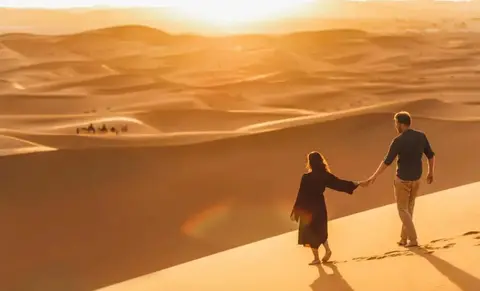
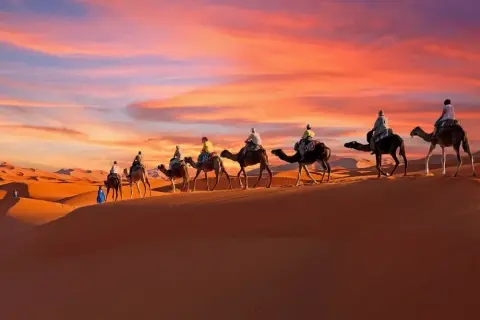
On a desert trip to Merzouga, you will spend the afternoon in the car, ride a camel into the Erg Chebbi dunes around sunset, and spend the night in a camp. That calls for three types of clothing.
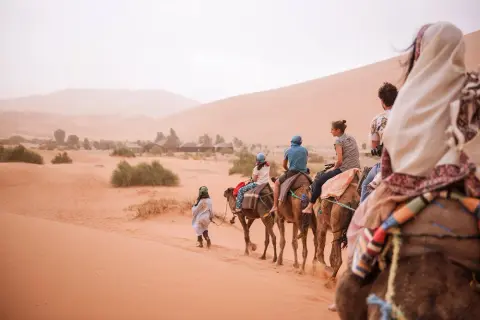
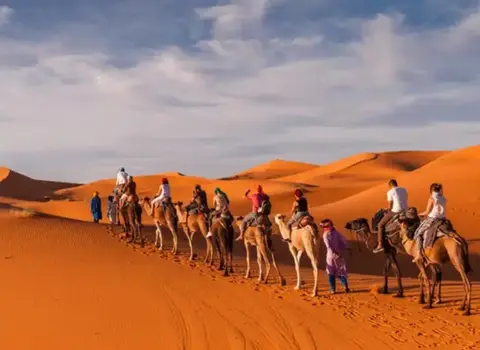
- For the camel ride: long, loose trousers (shorts chafe on the saddle), a long-sleeved top, sunglasses and a scarf or cheich (desert turban) for sun and wind-blown sand. Your guide can show you how to tie it.
- For the camp at night: a fleece or down jacket, warm trousers and socks. From November to March, add a hat; nights can drop close to freezing.
- Footwear: trainers or sandals with a strap. Many people go barefoot on the soft sand, but it can be very hot in the afternoon.
Pack a small overnight bag for the camel ride – main luggage usually stays in the vehicle or goes to camp separately. On a trip such as our 3-day Marrakech desert tour, your driver will tell you what to take for the night; if you are planning a longer ride such as two nights of camel trekking in Merzouga, ask us what to bring in your day bag.
What to wear for the Atlas Mountains
For a day trip to the Ourika Valley or the villages around Imlil, wear walking shoes with good grip, trousers and a layer for the wind. For multi-day treks, bring proper hiking boots, a warm mid-layer, a waterproof shell, sun protection and a warm hat – conditions change fast at altitude. Our Atlas Mountains guide has more trekking advice.
Shoes, mosques, hammams and other details
Shoes
Comfortable, closed walking shoes with grip are essential in the medinas, where lanes are cobbled, uneven and sometimes wet. Add sandals for warm days and a smarter pair for evenings if you like.
Visiting mosques and religious sites
Most working mosques are closed to non-Muslims. Where visits are possible, such as the Hassan II Mosque in Casablanca, cover arms and legs, and women should cover their hair. Shoes come off at the entrance, so wear socks or easy slip-ons.
Hammams
In a public hammam, men usually wear swim shorts or underwear and women often wear bikini bottoms or underwear. Spa hammams provide disposable underwear. Bring a change of clothes and flip-flops.
Beaches and pools
Swimwear is normal at hotel pools and on tourist beaches in Agadir, Essaouira and Taghazout. Cover up with a shirt or kaftan when walking back into town.
A simple Morocco packing checklist
- 3–4 loose tops with sleeves, 1 long-sleeved shirt
- 2–3 pairs of loose trousers or long skirts
- 1 large scarf or pashmina
- 1 fleece or warm jumper; a down jacket from November to March
- Comfortable walking shoes and sandals
- Sun hat, sunglasses and high-factor sunscreen
- Swimwear for riad pools, hammams or the coast
- A small daypack and a cross-body bag for the souks
Forget something? The souks sell scarves, cheichs, sandals and warm djellabas at reasonable prices, and buying one is part of the fun.
Frequently asked questions
Can I wear shorts in Morocco?
Yes, knee-length shorts are fine in tourist areas, on the coast and on desert trips, especially for men. In traditional neighbourhoods, small towns and religious sites, long trousers or skirts are more appropriate. Very short shorts attract attention in the medinas, so many travellers prefer loose linen trousers, which are just as cool in the heat.
Do women need to cover their hair in Morocco?
No, foreign women do not need to cover their hair in Morocco. The exception is entering a mosque that admits visitors, such as the Hassan II Mosque in Casablanca, where a headscarf is expected. Carrying a light scarf is still useful for sun, sand and dusty roads, and many women wear one in the desert.
What should I wear in Marrakech?
In Marrakech, wear loose clothing that covers your shoulders and knees, comfortable closed shoes for the medina, and sunglasses and a hat for the sun. The city is relatively relaxed, but modest clothing reduces hassle in the souks. From November to March, bring a warm layer, as evenings can be cold.
What should I wear in the Sahara desert at night?
At night in the Sahara, wear warm trousers, a fleece or down jacket and socks, and from November to March a hat as well. Temperatures fall sharply after sunset, and winter nights in the Merzouga dunes can approach freezing. Camps provide blankets, but your own warm layers make stargazing outside much more comfortable.
Are jeans a good idea in Morocco?
Jeans are fine in Morocco from late autumn to spring and in the mountains, and many Moroccans wear them. In summer they are too hot for most travellers, and they take a long time to dry. Lightweight trousers in linen or quick-dry fabric are a more practical choice for warm weather and long travel days.
Published · Updated