Destinations
Casablanca Travel Guide: What to Do in Morocco’s Modern Heart
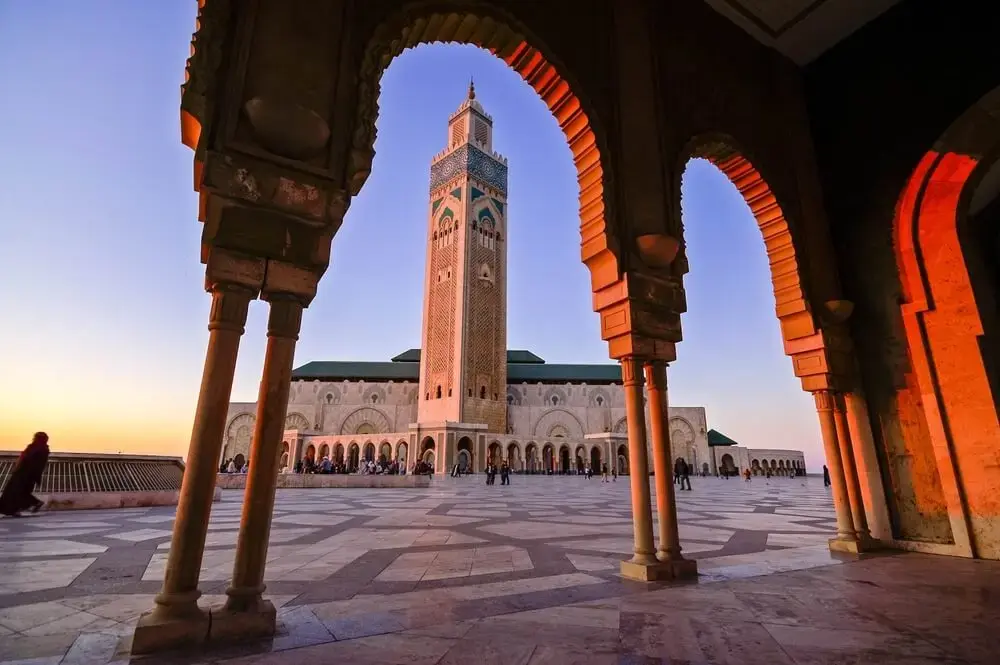
Casablanca is Morocco’s largest city and economic capital, and the main international gateway for many visitors. It is worth a day or two for the Hassan II Mosque – one of the few mosques in Morocco open to non-Muslims – its Art Deco and Mauresque architecture, the Habous quarter and the Atlantic Corniche, before continuing to Rabat, Fes, Marrakech or the Sahara.
Is Casablanca worth visiting?
Casablanca does not try to be Marrakech, and that is its appeal. “Casa”, as Moroccans call it, is a working city of more than three million people, with business districts, beach clubs, a busy port and wide boulevards laid out under the French protectorate. It shows you modern, urban Morocco rather than a postcard version.
Most visitors pass through Mohammed V International Airport, and many spend a day here at the start or end of a tour. That is enough time for the Hassan II Mosque and the downtown architecture. Stay longer if you like city life, food and design.
Casablanca or Marrakech?
If you only have time for one, Marrakech offers more traditional sights – souks, palaces, Jemaa el-Fna. Casablanca is better for modern architecture, seafood and an easy introduction to Morocco on day one. The two are about 240 km apart, roughly 2.5–3 hours by motorway or train, so many itineraries include both.
Top things to do in Casablanca
Visit the Hassan II Mosque
Completed in 1993 on a platform partly built over the Atlantic, the Hassan II Mosque is the largest mosque in Morocco. Its minaret, about 210 m tall, is among the tallest in the world. Inside, the prayer hall is decorated with carved cedar, marble, stucco and zellige by Moroccan craftsmen, and part of the floor is glass.
Unlike most Moroccan mosques, it can be visited by non-Muslims on guided tours, which run at set times most days. Tours are usually not held on Friday mornings and are adjusted around prayer times and religious holidays, so check the current schedule. Cover arms and legs; women should bring a headscarf.
Explore downtown’s Art Deco and Mauresque architecture
Between the 1910s and 1950s, Casablanca was one of the world’s great laboratories of modern architecture. Walk from Mohammed V Square, with its law courts and administrative buildings, along Boulevard Mohammed V and the streets around the Central Market to see curved balconies, geometric ironwork and façades that blend Art Deco with Moroccan motifs – the style known as Mauresque. The Sacré-Cœur cathedral, now a cultural space, is another landmark.
Wander the Old Medina
Casablanca’s Old Medina, just inland from the port, is small and lived-in rather than polished. It is a place for everyday shopping and a glimpse of local life. The restored Sqala bastion on its seaward side has a café in a garden behind the old walls.
Shop in the Quartier Habous
Built in the 1930s as a “new medina”, the Habous quarter has arcaded streets, small squares and shops selling books, olives, babouches, brassware and pastries. It is calmer and easier to browse than most medinas, and the Royal Palace and Mahkama du Pacha (a court building with fine decoration) are nearby.
Walk the Corniche at Aïn Diab
West of the mosque, the Corniche is Casablanca’s seafront promenade, lined with beach clubs, cafés and restaurants. It is busiest at sunset and on weekends. At its western end, the shrine of Sidi Abderrahmane sits on a rock reachable on foot at low tide; non-Muslims can walk across but not enter.
Eat seafood near the port
As an Atlantic port, Casablanca is excellent for fish. Choose from simple grills near the fishing port to smarter seafood restaurants, and try the city’s café culture, which is a big part of daily life. Rick’s Café, a recreation of the bar from the 1942 film Casablanca, opened in 2004 in a restored mansion by the medina walls and is popular for dinner.
Casablanca itineraries
One day in Casablanca
- Morning: guided tour of the Hassan II Mosque.
- Late morning: taxi to the Habous quarter for crafts and pastries.
- Lunch: seafood near the port or in the Central Market area.
- Afternoon: walk the Art Deco streets around Mohammed V Square.
- Evening: sunset on the Corniche or dinner by the medina walls.
Two days in Casablanca
Add the Old Medina and Sqala in the morning and a slow afternoon at a Corniche beach club. Alternatively, take a day trip to Rabat, Morocco’s capital, about 90 km away (1–1.25 hours by train or road), for the Kasbah of the Udayas, the Hassan Tower and the Mausoleum of Mohammed V.
Continuing your trip
From Casablanca, routes usually head north-east to Rabat, Meknes and Fes, then south across the Middle Atlas to the Sahara, before finishing in Marrakech. The 5-day tour from Casablanca covers imperial cities and the desert at a brisk pace, while the 7-day tour from Casablanca and 12-day grand tour allow more time in each place. For other trip lengths, see our Morocco itinerary ideas.
Practical tips for Casablanca
Getting from the airport
Mohammed V International Airport is about 30 km south of the city. Trains run to Casa Voyageurs and Casa Port stations, and taxis or pre-booked transfers take roughly 40–60 minutes depending on traffic. If you are starting a tour, your driver can usually meet you at arrivals – we will confirm this in your quote.
Getting around
- Tram: modern lines link downtown, the main train stations and the Corniche. Buy a rechargeable card at the stations.
- Petits taxis: red cars for trips within the city. Ask for the meter or agree a fare first.
- Grands taxis: white cars for longer or intercity journeys; agree the price before setting off.
- Trains: Casa Voyageurs connects to Rabat, Fes, Tangier (via the high-speed line from Kenitra) and Marrakech.
Where to stay
Downtown hotels near Mohammed V Square are practical for sightseeing; the Corniche and Aïn Diab suit a seaside stay. There are fewer traditional riads here than in Fes or Marrakech. Our accommodation guide explains the options.
When to visit
Casablanca has a mild Atlantic climate. Summers are warm but rarely as hot as inland cities, and winters are mild with most rain between November and March. Spring and autumn are the most comfortable seasons.
Frequently asked questions
How many days do you need in Casablanca?
One full day is enough to see Casablanca’s highlights: the Hassan II Mosque, the Habous quarter, downtown Art Deco architecture and the Corniche. With two days you can add the Old Medina and a slower seafront afternoon, or take an easy day trip to Rabat, which is about an hour away by train.
Can non-Muslims visit the Hassan II Mosque?
Yes. The Hassan II Mosque is one of the few mosques in Morocco that non-Muslims can enter, on guided tours at set times. Tours are normally not available on Friday mornings and change around prayer times and religious holidays, so check the schedule before you go. Dress modestly, and women should cover their hair.
Is Casablanca safe for tourists?
Casablanca is generally fine for tourists who take normal big-city precautions. Watch for pickpockets in crowded places, use metered or pre-agreed taxis, and stay on well-lit streets late at night. The mosque area, downtown and the Corniche are busy and easy to visit. Check your government’s travel advice before travelling.
How far is Casablanca from Marrakech?
Casablanca is about 240 km from Marrakech, which takes roughly 2.5–3 hours by motorway. Direct trains also link the two cities in around the same time. Many itineraries start in Casablanca and end in Marrakech, or the reverse, with Fes and the Sahara in between.
Is Rick’s Café in Casablanca real?
The original Rick’s Café existed only on a Hollywood film set; the 1942 film was not shot in Morocco. Today’s Rick’s Café is a restaurant and bar opened in 2004 in a restored mansion by the Old Medina walls, designed to recreate the film’s atmosphere. It is popular with visitors, so booking ahead for dinner is sensible.
Published · Updated