Travel planning
Accommodation in Morocco: Riads, Kasbahs, Hotels and Desert Camps
Accommodation in Morocco ranges from riads – traditional courtyard houses inside the old medinas – to restored kasbahs in the southern valleys, modern hotels and resorts, and tented camps in the Sahara dunes. Most travellers combine several: a riad in Marrakech or Fes, a kasbah-style hotel on the road south, and a night in a desert camp near Merzouga.
Types of accommodation in Morocco at a glance
Where you sleep shapes your trip more in Morocco than in many countries. A riad in the medina gives you the sounds and rhythm of the old city; a kasbah on the road south gives you mud-brick walls and views of palm groves; a desert camp gives you silence and stars. Here is how the main options compare.
| Type | Where you find it | Best for | Things to know |
|---|---|---|---|
| Riad / dar | Medinas of Marrakech, Fes, Chefchaouen, Essaouira, Meknes | Atmosphere, location, personal service | Few rooms, steep stairs, often no car access; rooms can be small or dark |
| Kasbah hotel | Aït Ben Haddou, Ouarzazate, Skoura, Dades and Todra valleys | Overnight stops on desert routes, scenery | Rural settings, thick earthen walls, cool in summer and chilly in winter |
| Hotel / resort | New towns, Casablanca, Rabat, Agadir, Taghazout, outskirts of Marrakech | Families, pools, accessibility, business travel | Less local character, but larger rooms and more facilities |
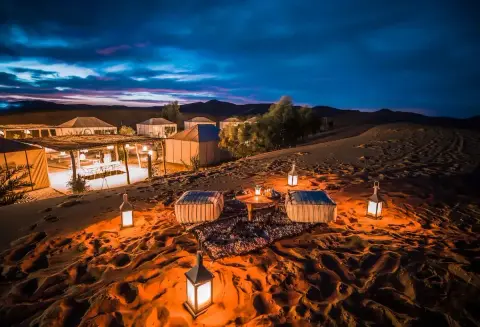
| Desert camp | Erg Chebbi near Merzouga; Erg Chigaga beyond M’Hamid; Agafay near Marrakech | A night in the dunes | Standard to luxury tents; cold nights in winter; reached by camel or 4×4 |
What is a riad?
The word riad comes from the Arabic for garden. A traditional riad is a townhouse built around a central courtyard, often with a fountain, orange trees and a garden laid out in four beds. From the lane, all you see is a plain wall and a heavy wooden door; inside, rooms open onto the courtyard and a staircase leads up to the roof terrace.
Today most riads in the medinas of Marrakech and Fes are guesthouses with somewhere between three and fifteen rooms. Staff are usually few and attentive, breakfast is served in the courtyard or on the roof, and many riads can cook a set dinner on request.
Riad or dar?
Strictly, a dar is a courtyard house without a garden – the courtyard is tiled rather than planted. In practice, guesthouses use both names loosely, so look at photos rather than the label.
Pros and cons of staying in a riad
- Pros: walking distance to the souks and monuments, a quiet retreat behind thick walls, decoration in zellige tilework and carved plaster, and staff who can arrange guides, hammams and transfers.
- Cons: cars cannot enter most medina lanes, so a porter with a handcart often meets you at the nearest road; staircases can be steep; rooms facing the courtyard can be dim; a courtyard open to the sky means some noise and, in winter, cool rooms.
Kasbahs and ksars: sleeping in the southern valleys
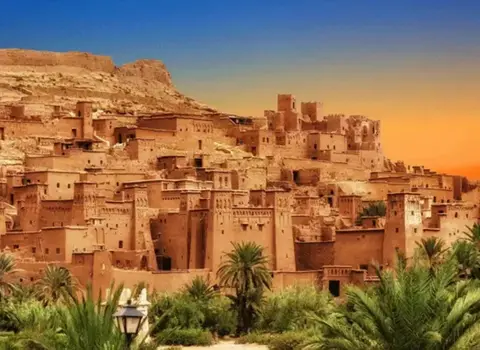
A kasbah is a fortified house or citadel, traditionally built of rammed earth and mud brick with thick walls and corner towers. A ksar is a fortified village containing many houses – the most famous is Aït Ben Haddou, a UNESCO World Heritage Site since 1987.
Many old kasbahs in Skoura, the Dades Valley and around Ouarzazate have been restored as hotels, and newer hotels are built in the same style. They are the natural place to break the long drive from Marrakech to the Sahara. On the 3-day tour from Marrakech to Fes, for example, the first night is spent in the Dades Valley after crossing the Tizi n’Tichka pass and visiting Aït Ben Haddou.
Expect rooms with small windows that stay cool in summer, views over palm groves or gorges, and dinner served on site, since there is often little else nearby. In winter, ask whether rooms are heated.
Hotels and resorts
International and Moroccan hotel chains are well represented in Casablanca, Rabat, Marrakech’s Hivernage and Palmeraie districts, and along the coast at Agadir and Taghazout. They make sense if you want a large pool, a gym or kids’ club, lifts and step-free access, or easy parking.
In Marrakech, a popular approach is to split your stay: a few nights in a riad for the medina, then a resort with gardens and a big pool on the edge of the city to rest. On the Atlantic coast, beach hotels in Agadir work well for families and for travellers ending a trip with a few days of downtime.
Sahara desert camps
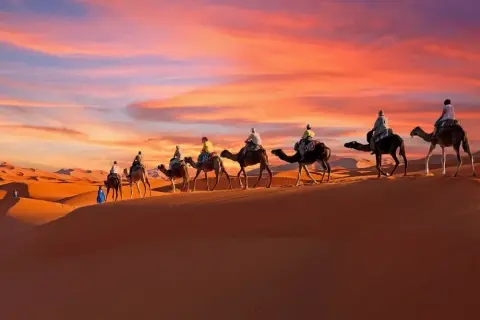
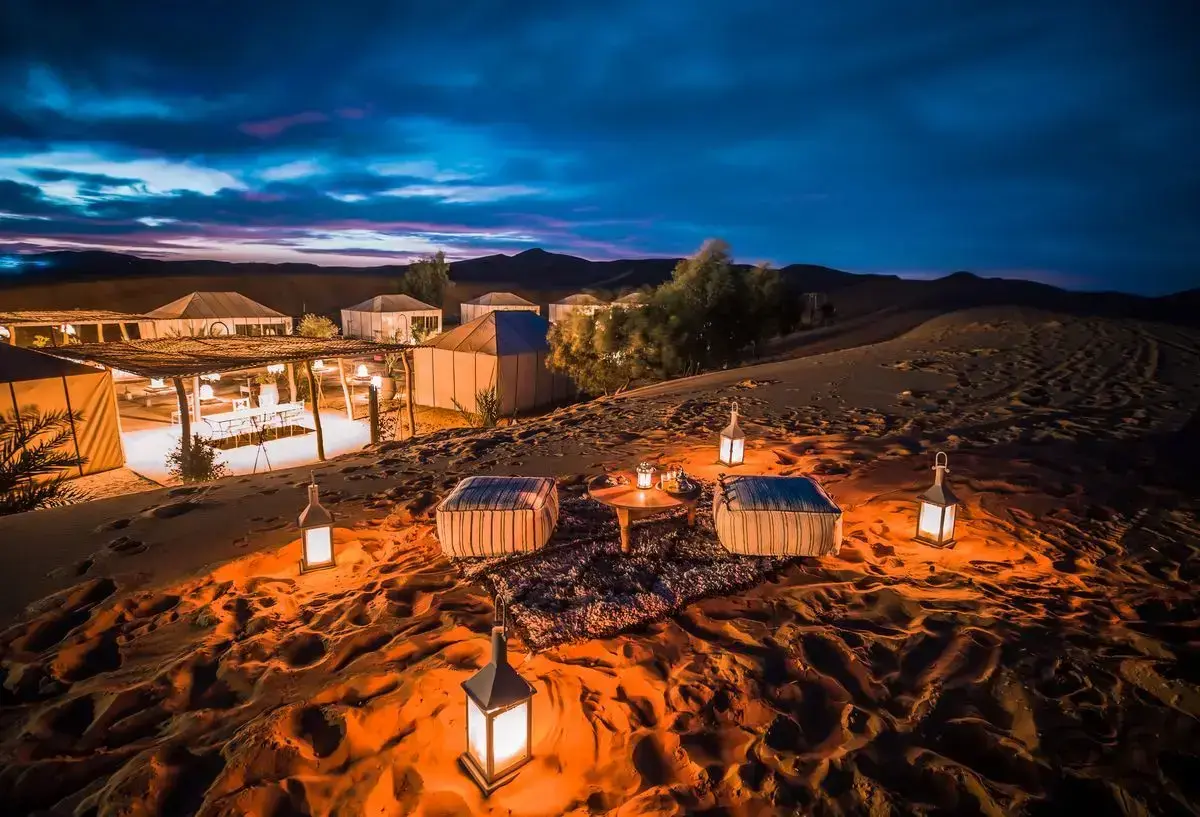
A night in the dunes is the highlight of most trips to Morocco. Near Merzouga, camps sit among the Erg Chebbi dunes, usually reached by a camel ride at sunset with luggage taken separately by 4×4. Dinner, often a tagine, is served at the camp, followed in many camps by drumming and music around a fire.
Standard and luxury camps
- Standard camps: traditional woollen or canvas tents with beds and blankets, and shared toilets and showers. Simple, sociable and closest to the old nomadic style.
- Luxury camps: private tents with proper beds, en-suite bathrooms with hot showers and flush toilets, electricity and more elaborate meals. Some have heating for winter nights.
Our overnight desert camp in Merzouga is a good option if you are already in the area or driving yourself. For more on the camel ride, camp life and other desert areas such as Erg Chigaga and Agafay, read our Sahara desert and Merzouga guide.
Where to stay, stage by stage
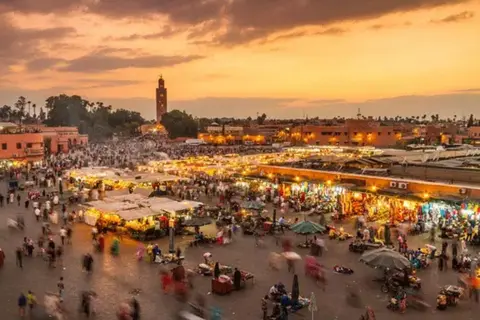
- Marrakech: a riad in the medina within walking distance of Jemaa el-Fna, or a hotel in Hivernage or the Palmeraie for space and pools.
- Fes: a riad in Fes el-Bali near Bab Bou Jeloud or the Batha area for easy taxi access, or a hotel in the Ville Nouvelle.
- Chefchaouen: a small guesthouse in the blue medina, ideally with a roof terrace for the views.
- Road to the Sahara: a kasbah hotel in Skoura, the Dades Valley or near Aït Ben Haddou.
- Merzouga: a desert camp in the Erg Chebbi dunes, or a hotel at the edge of the dunes if you prefer walls to canvas.
- Coast: a riad in the Essaouira medina, or a beach hotel in Agadir or Taghazout.
On a multi-day route such as the 6-day tour from Marrakech, you will typically experience several of these in one trip. We will confirm the accommodation level and properties in your quote.
How much does accommodation in Morocco cost?
Prices vary a lot by city, season and comfort level, and peak dates such as Easter, Christmas and New Year cost more. As a rough guide, simple guesthouses and budget riads start at around US$30–50 per room per night, comfortable mid-range riads and hotels are often in the US$80–150 range, and luxury riads, boutique hotels and resorts can be US$300 or more.
Desert camps range widely, from simple tents to luxury camps priced like boutique hotels. Breakfast is almost always included in riads and kasbahs, and dinner is usually included at desert camps.
Frequently asked questions
What is the difference between a riad and a hotel in Morocco?
A riad is a traditional courtyard house in the old medina, converted into a small guesthouse with a handful of rooms and personal service. A hotel is usually a larger, modern building outside the medina, with more facilities such as pools, lifts and parking. Riads offer atmosphere and location; hotels offer space and convenience.
Is it better to stay inside or outside the medina?
For a first visit to Marrakech or Fes, staying inside the medina is usually better, because you can walk to the souks and monuments and experience the old city in the evening. Stay outside if you need step-free access, a big pool, car access to the door, or a quieter base for a longer stay.
What is a kasbah hotel?
A kasbah hotel is a restored or newly built hotel in the style of a traditional fortified earthen house, found mainly in southern Morocco. They are common in Aït Ben Haddou, Ouarzazate, Skoura and the Dades and Todra valleys, and are the usual overnight stop on desert tours between Marrakech and Merzouga.
Do Sahara desert camps have toilets and showers?
Yes, all established desert camps near Merzouga have toilets, and most have showers. In standard camps these are shared facilities; in luxury camps each tent usually has its own en-suite bathroom with hot water and a flush toilet. Ask which type of camp is included when you book a desert tour.
How much does a riad cost in Marrakech?
Riads in Marrakech start from roughly US$30–50 a night for simple rooms, with comfortable mid-range riads often costing US$80–150 and luxury riads US$300 or more. Prices rise at Easter, Christmas and New Year and during major events. Breakfast is almost always included, and many riads offer dinner on request.
Published · Updated