Destinations
Marrakech Travel Guide: Best Things to Do, Riads and Day Trips
Marrakech is Morocco’s best-known city, with a UNESCO-listed medina (1985) centred on Jemaa el-Fna square, a maze of souks, palaces and gardens, and easy access to the High Atlas and the Sahara. Three days is a good minimum: two for the city and one for a day trip, before or after a desert tour.
Marrakech in brief
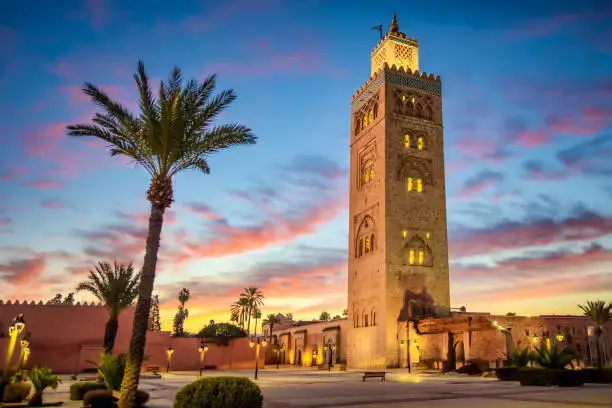
Founded in the 11th century by the Almoravids, Marrakech gave its name to the whole country in many languages. The old city is enclosed by around 19 km of ochre-red walls – the reason it is called the Red City – with the Koutoubia minaret as its landmark.
Outside the walls, Guéliz and Hivernage are the modern districts, with cafés, galleries and hotels. Most first-time visitors spend their time in the medina and use the new town for dinner, shopping or a quieter base. This Marrakech travel guide focuses on what to see, where to stay and how to plan day trips from the city.
Top things to do in Marrakech
Jemaa el-Fna square
The square at the heart of the medina is part of UNESCO’s list of intangible cultural heritage for its storytellers, musicians and performers. In the morning it is relatively calm, with orange juice carts and henna artists. From late afternoon, food stalls are set up in rows, smoke rises from the grills and crowds gather around Gnaoua musicians. Watch from a rooftop café first, then go down into it.
The souks
North of the square, the souks spread out in a web of covered lanes, each traditionally specialising in a craft: Souk Semmarine for textiles, the dyers’ souk with hanks of coloured wool drying overhead, the blacksmiths’ souk, and stalls of lanterns, leather and babouches. Bargaining is expected. Settle on a price you are happy with and keep the tone friendly.
Bahia Palace
Built in the late 19th century for a grand vizier, the Bahia Palace is a series of courtyards, gardens and reception rooms with painted cedar ceilings, zellige and carved stucco. Go when it opens to see it before tour groups arrive.
Saadian Tombs and El Badi Palace
The Saadian Tombs, sealed off for centuries and rediscovered in 1917, hold the burial chambers of the 16th-century Saadian dynasty, including the richly decorated Hall of Twelve Columns. Nearby, the ruins of El Badi Palace give a sense of the dynasty’s ambition, and storks nest on its walls.
Ben Youssef Madrasa
This 16th-century Koranic school is one of the finest buildings in the city, with a marble courtyard, cedar carving and student cells arranged around upper galleries. Combine it with the Marrakech Museum and the small Almoravid Koubba nearby.
Jardin Majorelle and the YSL Museum
Created by the painter Jacques Majorelle and later owned by Yves Saint Laurent and Pierre Bergé, this garden of cacti, bamboo and cobalt-blue buildings is the most visited sight in Guéliz. The Yves Saint Laurent Museum next door is excellent. Tickets are sold online for timed entry and often sell out at busy times.
A hammam
A hammam is part of Moroccan life: steam, black soap, a vigorous scrub with a kessa glove, and often a massage with argan oil. Choose between a local public hammam (cheap and authentic) and a spa hammam (more private and comfortable).
Where to stay in Marrakech
A riad – a traditional house built around a courtyard – is the classic Marrakech stay. You will find hundreds inside the medina, from simple guesthouses to luxury riads with plunge pools. Choose one within about 10 minutes’ walk of Jemaa el-Fna or near a gate that taxis can reach, such as Bab Doukkala or Bab Laksour.
- Medina: atmosphere and walking distance to the sights; cars cannot reach most doors.
- Kasbah area: near the Saadian Tombs and El Badi; a little quieter than the central souks.
- Hivernage and Guéliz: modern hotels, restaurants and easy taxi access.
- Palmeraie and the Atlas foothills: resorts with gardens and large pools, best if you plan to relax.
Our accommodation guide compares riads, hotels, kasbahs and desert camps in more detail.
Best day trips and tours from Marrakech
| Destination | Distance | Drive time (approx.) | Highlights |
|---|---|---|---|
| Ourika Valley | 65 km | 1.25 hours | River cafés, Setti Fatma waterfalls |
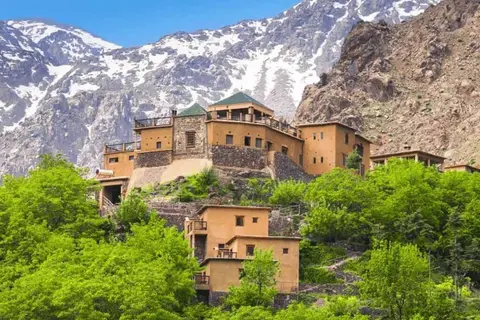
| Imlil (High Atlas) | 65 km | 1.5 hours | Berber villages, walks in Toubkal National Park |
| Agafay desert | About 40 km | 45 minutes–1 hour | Stony desert landscape, sunset and dinner at a camp |
| Ouzoud Waterfalls | 150 km | 2.5–3 hours | 110 m falls, Barbary macaques |
| Essaouira | 190 km | 2.5–3 hours | Fortified port, medina, seafood |
| Aït Ben Haddou | 185 km | 3.5–4 hours | UNESCO-listed ksar, Tizi n’Tichka pass |
A sunrise balloon flight
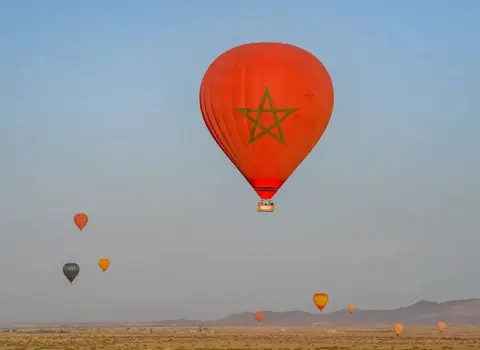
For a different view of the city’s surroundings, a hot air balloon flight over Marrakech takes off at dawn and drifts over the plains and villages towards the Atlas foothills.
Sahara desert tours from Marrakech
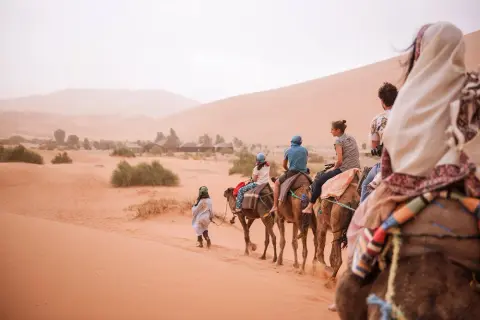
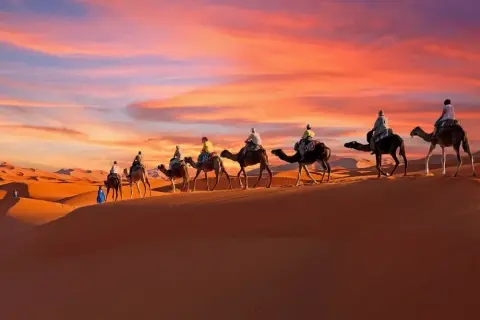
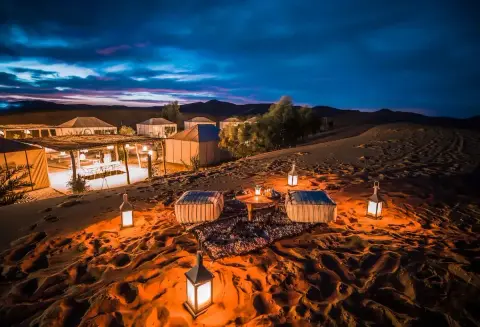
Merzouga and the Erg Chebbi dunes are about 560 km from Marrakech, so the trip is best split with an overnight stop. A 2-day desert tour from Marrakech is the shortest option, while the 3-day Marrakech desert tour crosses the High Atlas, visits Aït Ben Haddou and the Dades Valley and gives you a night in a camp in the dunes. Travellers who prefer a sociable, budget-friendly option can join the shared 3-day desert tour. Our Sahara and Merzouga guide explains what to expect.
Practical tips for Marrakech
Getting from the airport
Marrakech Menara Airport is about 6 km from the medina, roughly 15–20 minutes by car. Pre-book a transfer through your riad, take a petit taxi from the official rank (agree the fare first), or use the airport bus to Jemaa el-Fna.
Money
The currency is the Moroccan dirham (MAD). Cards are accepted in many hotels, larger restaurants and modern shops, but cash is essential in the souks, small cafés and taxis. ATMs are plentiful in Guéliz and around the medina.
Getting around
Walk in the medina and use petits taxis for longer distances. Ask for the meter or agree a price before setting off. Download an offline map, as lanes are poorly signposted.
Etiquette and safety
Dress modestly, ask before photographing people, and decline unofficial guides with a polite “la, shukran”. Keep valuables secure in crowds. Our Morocco safety guide and what to wear in Morocco go into more detail.
When to go
March to May and October to November are the most comfortable months. July and August often exceed 38°C; December to February are sunny but cold at night.
Frequently asked questions
How many days do you need in Marrakech?
Three days is a good minimum for Marrakech. Two days lets you see the medina, Jemaa el-Fna, the main palaces, a madrasa and the Majorelle Garden at a comfortable pace, and a third day allows a trip to the Atlas Mountains, the Agafay desert or Essaouira. Add more time if you are starting or ending a desert tour here.
What is the best month to visit Marrakech?
April and October are the best months for most travellers, with warm days and comfortable evenings. March, May and November are also pleasant. July and August are very hot, often above 38°C, while December to February are sunny by day but cold at night, especially in riads without heating.
Can you drink alcohol in Marrakech?
Yes, alcohol is available in licensed hotels, bars, many restaurants in Guéliz and Hivernage, and some riads. It is not sold at food stalls or in most small medina cafés, and supermarkets in the new town have separate alcohol sections. Drinking in public streets is not acceptable, and availability is reduced during Ramadan.
How do you get from Marrakech airport to the medina?
The simplest option is a transfer pre-booked through your riad, as the driver can walk you to a door that cars cannot reach. Petits taxis wait at the official rank; agree the fare before you get in. There is also an airport bus to Jemaa el-Fna. The drive takes about 15–20 minutes.
Can you do a day trip to the Sahara from Marrakech?
Not to the big dunes. Merzouga is about 560 km away and Zagora about 360 km, so a return day trip is impractical. The nearest desert-style experience is the stony Agafay desert, about 45 minutes away. To sleep among real sand dunes, plan at least two days, or three for a more relaxed pace.
Published · Updated