Destinations
Atlas Mountains Morocco Guide: Toubkal Treks, Day Trips and Berber Villages
The Atlas Mountains are Morocco’s great mountain chain, running roughly south-west to north-east across the country and rising to 4,167 m at Jebel Toubkal, North Africa’s highest peak. From Marrakech you can reach High Atlas villages such as Imlil or the Ourika Valley in about 1.5 hours, climb Toubkal in two or three days, or cross the range over the Tizi n’Tichka pass on the way to the Sahara.
The Atlas Mountains of Morocco in brief
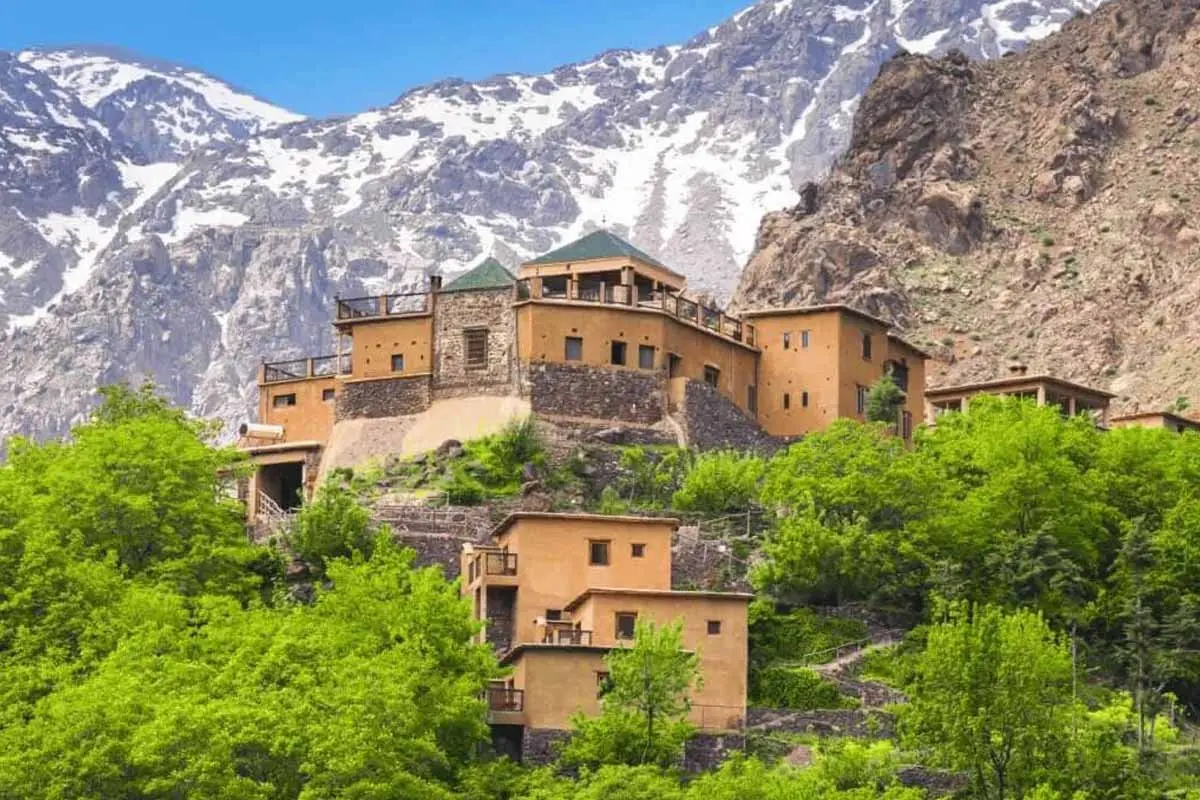
Seen from a Marrakech rooftop on a clear winter morning, the snow-capped High Atlas seems close enough to touch. The range forms a barrier between the fertile plains of the north and west and the pre-Saharan valleys of the south, and it is home to many of Morocco’s Amazigh (Berber) communities.
| Range | Where | Highlights | Best for |
|---|---|---|---|
| High Atlas | South and east of Marrakech | Toubkal, Imlil, Ourika Valley, Tizi n’Tichka, Dades and Todra gorges on the southern side | Trekking, day trips, scenic drives |
| Middle Atlas | South of Fes and Meknes | Ifrane (“Little Switzerland”), Azrou cedar forest, Barbary macaques | Scenic stops on the Fes–Sahara route |
| Anti-Atlas | South of the High Atlas, towards the Sahara | Tafraoute, granite landscapes, argan country | Quiet road trips and walking |
Climbing Toubkal: the roof of North Africa
Jebel Toubkal (4,167 m) is the highest mountain in North Africa, and the standard route from Imlil requires no technical climbing in summer. It is still a serious walk: you gain more than 2,400 m from Imlil to the summit, and the altitude is noticeable for most people.
The standard route
- Day 1: Drive from Marrakech to Imlil (approx. 65 km, 1.5 hours). Walk up the Mizane Valley past the shrine of Sidi Chamharouch to the Toubkal refuge at around 3,200 m – usually 5–6 hours.
- Day 2: Start before dawn for the summit, about 3–4 hours of steep scree and rock. Return to the refuge, then descend to Imlil – a long day of 9–11 hours in total.
A three-day version adds a night in Imlil or at the refuge, which helps acclimatisation and makes the experience far more enjoyable. Mules carry luggage to the refuge, and meals are provided there.
Winter ascents
From roughly December to March, and sometimes into April, the upper mountain is covered in snow and ice. A winter ascent needs crampons, an ice axe, the skills to use them and a qualified mountain guide. Treat it as a mountaineering trip rather than a hike.
Day trips from Marrakech into the Atlas
Imlil and the Toubkal National Park
If you are not climbing Toubkal, Imlil is still the best short introduction to the High Atlas. Walks of two to four hours lead through walnut groves and terraced fields to villages such as Aroumd, where you can stop for mint tea in a family home. The drive from Marrakech takes about 1.5 hours via Asni.
Ourika Valley and Setti Fatma
The Ourika Valley (approx. 65 km, 1.25 hours from Marrakech) is the most popular half- or full-day trip. The road follows the river past riverside cafés to Setti Fatma, from where a rocky path climbs to a series of small waterfalls. The scramble is short but steep and slippery in places, so wear shoes with grip. Weekends and summer days are busy with Marrakchi families escaping the heat.
Ouzoud Waterfalls
Further away (approx. 150 km, 2.5–3 hours), the Cascades d’Ouzoud drop roughly 110 m in several tiers into a red-rock gorge in the foothills of the Middle Atlas. Paths lead down past olive trees to the base, where small boats take visitors close to the spray, and Barbary macaques live in the trees around the falls. It is a long day, but one of Morocco’s most impressive natural sights.
Longer itineraries such as the 16-day Morocco tour include time for Atlas excursions like Ouzoud; on shorter trips, ask us about adding a mountain day before or after your tour.
Crossing the High Atlas on the way to the Sahara
Many travellers experience the Atlas from the road. The N9 from Marrakech climbs through oak and juniper forest and Berber villages to the Tizi n’Tichka pass at 2,260 m, then descends to Aït Ben Haddou and Ouarzazate – about 185 km and 3.5–4 hours without stops to Aït Ben Haddou.
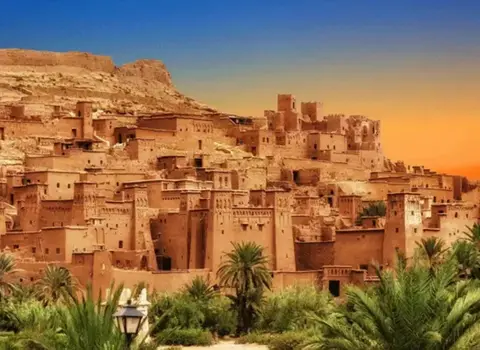
Aït Ben Haddou, a fortified earthen village and UNESCO World Heritage Site since 1987, has appeared in films and series including Lawrence of Arabia, Gladiator and Game of Thrones. Beyond Ouarzazate, the road follows the southern flank of the High Atlas through Skoura, the Dades Valley and the Todra Gorge, whose walls rise to around 300 m.
This is the route followed by the 2-day desert tour from Marrakech and, with a night in the Dades Valley, the 3-day tour from Marrakech to Fes, which then crosses the Middle Atlas via Midelt and Ifrane on its way north.
Berber culture in the mountains
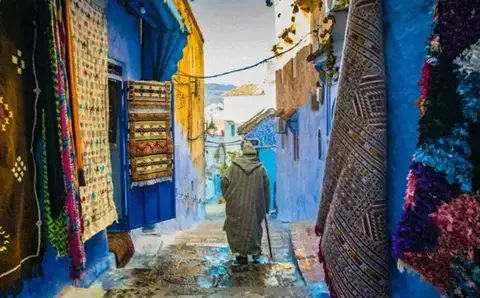
The Atlas is the heartland of the Amazigh people, Morocco’s indigenous population. In the High Atlas you will hear Tashelhit, one of the Amazigh languages, as often as Arabic. Villages are built of stone and earth, often stacked up the hillside above irrigated terraces of barley, walnuts and apples.
- Accept an invitation to tea if you have time – it is a genuine gesture of hospitality.
- Ask before photographing people, especially women and children.
- Dress modestly in villages, even on hot days.
- Hiring a local guide or muleteer is the most direct way your visit supports the community.
Weekly souks are the heartbeat of rural life. Asni’s Saturday market, on the road to Imlil, is a good example, with livestock, vegetables, tools and tea stalls.
Planning your Atlas Mountains trip
When to go
April to June and September to October are the best months for walking, with stable weather and mild temperatures. July and August are hot in the valleys but pleasant higher up. Winter brings snow and very cold nights above about 2,000 m. See our guide to the best time to visit Morocco for monthly weather.
Guides
For anything beyond a short walk from Imlil, hire a qualified local mountain guide. Trails are not always waymarked, weather changes quickly, and a guide handles mules, refuge bookings and village hospitality.
What to pack
- Broken-in walking boots with ankle support
- Layers: base layer, fleece and a windproof, waterproof jacket
- Warm hat and gloves (even in summer for a Toubkal summit morning)
- Sun hat, sunglasses and high-factor sunscreen
- Head torch, water bottle or bladder, and water purification tablets
- A sleeping bag liner for refuge or gîte nights
Frequently asked questions
How far are the Atlas Mountains from Marrakech?
The High Atlas foothills begin about an hour from Marrakech. Imlil, the base for Toubkal, is about 65 km away (roughly 1.5 hours), and the Ourika Valley is about 65 km (around 1.25 hours). The Tizi n’Tichka pass on the road to Ouarzazate is roughly 2.5 hours away without stops.
How hard is it to climb Mount Toubkal?
Toubkal is a demanding but non-technical trek in summer. You need good fitness to climb more than 2,400 m over two days, including a steep scree section on summit morning, and altitude can cause headaches. No climbing experience is needed outside winter, but in snow you need crampons, an ice axe and a qualified guide.
How many days do you need to climb Toubkal?
Most people climb Toubkal in two days from Imlil, staying overnight at the refuge at about 3,200 m. A three-day itinerary, with an extra night in Imlil or at the refuge, gives better acclimatisation and a less rushed summit day. Longer circuits of four to six days link Toubkal with surrounding valleys and passes.
Can you visit the Atlas Mountains as a day trip?
Yes. Imlil and the Ourika Valley are each around 1.25–1.5 hours from Marrakech, so a full day allows a village walk, lunch and the drive back. The Ouzoud Waterfalls are a longer day at about 2.5–3 hours each way. If you are heading to the Sahara, you will also cross the High Atlas by road.
When is the best time to visit the Atlas Mountains?
April to June and September to October offer the best combination of mild temperatures and stable weather for hiking. Summer is hot in the lower valleys but fine at altitude. From December to March the high peaks are under snow, which is beautiful to look at but requires winter equipment and a guide for trekking.
Published · Updated