Destinations
Chefchaouen Travel Guide: Exploring Morocco’s Blue City
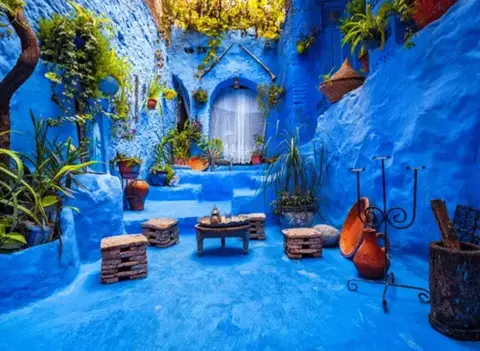
Chefchaouen is a small mountain town in Morocco’s Rif, famous for a medina washed in shades of blue. Most visitors spend one or two nights to wander the lanes, watch sunset from the Spanish Mosque and hike to the Akchour waterfalls; it is about 2 hours from Tangier and 3.5–4 hours from Fes by road.
Chefchaouen at a glance
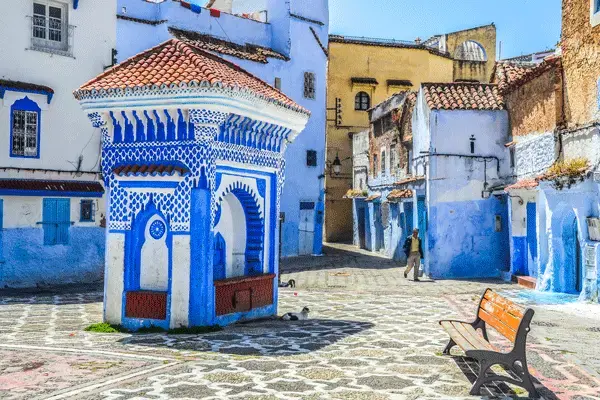
Founded in 1471 as a fortress at the foot of the Rif mountains, Chefchaouen – often shortened to Chaouen – grew with the arrival of Muslim and Jewish refugees from Andalusia. Its whitewashed and blue houses, tiled roofs and wooden balconies still feel more Andalusian than Saharan, and the medina is compact enough to walk end to end in twenty minutes.
Compared with Fes or Marrakech, the pace is slow. There are few cars in the old town, touts are fewer, and the mountain air is fresh. That calm is the main reason people come. If you are looking at the wider region – Tangier, Tetouan, Asilah and the Rif coast – see our northern Morocco guide; this page focuses on Chefchaouen itself.
Why is Chefchaouen blue?
Nobody can point to a single reason, and you will hear several explanations in town.
- Jewish heritage: the most widely told story links blue to the town’s Jewish community, for whom the colour symbolised the sky and the divine. Many locals say the custom spread through the medina during the 20th century.
- Keeping cool and keeping insects away: some residents believe blue lime wash keeps houses cooler or deters mosquitoes.
- Water and the mountains: others connect it to the Ras el-Ma spring and the sky above the Rif.
- Tourism: today, residents and the municipality repaint regularly, partly because the blue has become the town’s identity and livelihood.
Whatever the origin, it is a living tradition: around spring you will see families mixing pigment into lime wash and refreshing their doorsteps.
Best things to do in Chefchaouen
Wander the blue medina
The pleasure of Chefchaouen is simply walking. Start at Plaza Uta el-Hammam and drift uphill towards Bab Onsar and the Ras el-Ma spring, where women still wash clothes in the stream. The prettiest lanes are often the quiet residential ones in the upper medina. Early morning, before 9 am, is ideal for photographs without crowds.
Plaza Uta el-Hammam and the Kasbah
The main square is lined with cafés and restaurants under mulberry trees, facing the red-walled kasbah. Inside, a small ethnographic museum, an Andalusian garden and a tower you can climb give context to the town’s history. The octagonal minaret of the Grand Mosque stands beside it; non-Muslims cannot enter the mosque.
Sunset at the Spanish Mosque
Cross the stream at Ras el-Ma and follow the path up the hillside to the Spanish Mosque, built in the 1920s and no longer in use. The walk takes 20–30 minutes, and the view of the whole blue town against the mountains is best in the hour before sunset. Bring a torch for the walk down.
Shop for Rif crafts
Chefchaouen is known for woven wool blankets, striped textiles, wool djellabas and goat’s cheese from the surrounding hills. Shopping is relaxed and bargaining gentler than in Marrakech. Weavers still work on looms in small workshops in the medina.
Day trip to Akchour and God’s Bridge
Akchour, about 30 km away (around 45 minutes by road), is the starting point for walks along the Oued Farda through the Talassemtane National Park. One trail leads to a series of waterfalls and pools; another climbs to God’s Bridge (Pont de Dieu), a natural rock arch above the river. Allow half a day, wear shoes that can get wet, and avoid summer weekends if you prefer quiet trails.
How many days in Chefchaouen?
One night is the minimum to enjoy the town after the day-trippers leave. Two nights allow a relaxed day in the medina plus the Akchour hike. Some travellers stay longer for walking in the Rif, but there is little nightlife or big-ticket sightseeing beyond the town and the national park.
Chefchaouen fits naturally between Tangier and Fes. The 5-day tour from Tangier and the 6-day tour from Tangier both stop here before continuing to Fes and the Sahara, while the 6-day tour from Marrakech ends the trip in the Blue City after the desert and Fes.
Getting to Chefchaouen
There is no railway and no airport in Chefchaouen, so you arrive by road. The approaches through the Rif are scenic but winding.
| From | Distance | Drive time (approx.) | Notes |
|---|---|---|---|
| Tangier | 115 km | 2 hours | Via Tetouan; easiest arrival from Spain |
| Fes | 200 km | 3.5–4 hours | Through Ouezzane and the Rif foothills |
| Rabat | 250 km | About 4 hours | Motorway then mountain road |
| Casablanca | 340 km | 5–5.5 hours | Usually combined with Rabat en route |
CTM and other bus companies run daily services from Tangier, Tetouan, Fes and Casablanca; book a day or two ahead in busy periods. A private driver lets you stop at viewpoints and saves time. Coaches and taxis stop below the medina; from there it is a short walk uphill, or a petit taxi to the nearest gate.
Where to stay and eat
Stay inside or just below the medina so you can walk everywhere. Guesthouses and small riads with roof terraces give the best views; ask whether there is heating if you travel between November and March, as nights in the mountains are cold. Our guide to accommodation in Morocco explains riads and dars.
Food is simple and hearty. Try bessara (fava bean soup) for breakfast, local goat’s cheese, tagines with mountain herbs and fresh orange juice in the square. Restaurants on the upper floors around Uta el-Hammam have views over the rooftops. Alcohol is rarely served in the medina.
Practical tips
- Best time to visit: April to June and September to October. Summers are warm and busy; winters are cool, with most rain from November to March.
- Dress: the town is conservative. Cover shoulders and knees; see what to wear in Morocco.
- Cannabis offers: you may be offered hashish, as cannabis has long been grown in parts of the Rif. Decline politely – recreational use is illegal in Morocco.
- Cash: there are ATMs near the main square and outside the medina, but many small shops take cash only.
- Footwear: lanes are steep and slippery when wet, so bring shoes with grip.
Frequently asked questions
Is Chefchaouen worth visiting?
Yes, for most travellers Chefchaouen is worth the detour. Its blue medina is beautiful, the atmosphere is calm compared with larger cities, and the Rif mountains offer good walks nearby. It works best as an overnight stop between Tangier and Fes rather than a long day trip, so you can enjoy the quiet mornings and evenings.
How many days do you need in Chefchaouen?
One or two nights is ideal. One night gives you a sunset at the Spanish Mosque and an early-morning walk through empty blue lanes. A second night lets you add a half-day hike at Akchour to the waterfalls or God’s Bridge. Beyond that, Chefchaouen suits travellers who want rest or longer walks in the Rif.
How do I get from Fes to Chefchaouen?
Fes to Chefchaouen is about 200 km by road, taking roughly 3.5–4 hours. Options are a CTM or other bus, a shared grand taxi, or a private driver, which allows stops along the way. There is no train. Many multi-day tours link Fes and Chefchaouen, often continuing to Tangier or Rabat.
Why is Chefchaouen painted blue?
There is no single confirmed reason. The most common explanation links the blue to the town’s Jewish community and the symbolism of sky and heaven; others say it keeps houses cool or deters mosquitoes. Today residents and the town repaint regularly, partly because the colour has become Chefchaouen’s identity and draws visitors.
Is Chefchaouen safe?
Chefchaouen is generally a relaxed, low-hassle town for visitors. The main annoyances are occasional offers of hashish and some persistent sellers, which a polite refusal usually ends. Take normal care with valuables, use a torch on unlit paths after dark, and check your government’s travel advice before your trip.
Published · Updated