Travel planning
How to Plan a Trip to Morocco: Step-by-Step
To plan a trip to Morocco, choose your season first (spring and autumn suit most routes), decide how many days you have, pick a route that matches that time, then choose between a private or shared tour and set a budget. Once you know those basics, send an enquiry, review a tailored quote and confirm the itinerary before booking flights to the right airports.
Step 1: Decide when to go
Season shapes almost everything else in a Morocco trip, from the route you choose to what you pack. Morocco has a coast, high mountains and the edge of the Sahara, so one month can feel very different from place to place. The most comfortable months for a mixed route of cities and desert are generally March to May and September to November.
Summer is very hot inland – Marrakech, Fes and the desert regularly see daytime temperatures in the high 30s °C or above in July and August – while the Atlantic coast stays milder. Winter brings sunny, pleasant days in Marrakech but cold nights, snow on the High Atlas passes and near-freezing nights in the Sahara camps. For month-by-month detail, see our guide to the best time to visit Morocco.
| Season | Cities (Marrakech, Fes) | Sahara (Merzouga) | Good to know |
|---|---|---|---|
| Spring (Mar–May) | Warm days, mild evenings | Warm days, cool nights | Popular period; book camps and riads early around Easter |
| Summer (Jun–Aug) | Hot, often very hot inland | Very hot days, warm nights | Plan early starts; the coast is a good counterweight |
| Autumn (Sep–Nov) | Warm, settling to mild | Pleasant days, cool to cold nights | Excellent for desert tours and trekking |
| Winter (Dec–Feb) | Sunny days, chilly nights | Mild days, nights near freezing | Snow can briefly close the Tizi n’Tichka pass |
Also check the dates of Ramadan, which moves about 11 days earlier each year. Travel continues normally and tours run, but some cafés close during daylight hours and the rhythm of the day changes. Many travellers enjoy the atmosphere in the evenings.
Step 2: Work out how many days you have
Distances in Morocco are larger than many visitors expect. Marrakech to Merzouga is about 560 km, or 9–10 hours of driving without stops, and Fes to Merzouga is about 470 km. That is why the number of days you have matters more than the list of places you want to see.
- 3 days: one city plus a Sahara round trip, or a one-way desert crossing between Marrakech and Fes.
- 5 days: the desert with time for the Dades Valley and Todra Gorge, or a short city-and-desert loop.
- 7 days: two or three cities, the Sahara and the kasbah route at a comfortable pace.
- 10 days: imperial cities, Chefchaouen, the desert and Marrakech with rest days.
- 14 days or more: add the coast, the Atlas Mountains or a second desert night.
Our detailed guide on how many days you need in Morocco goes through each of these options with matching routes.
Step 3: Choose a route that fits
Most Morocco itineraries are built around a few proven routes. The right one depends on where you land, where you fly out from and whether the Sahara is a priority.
The classic loop: imperial cities and the Sahara
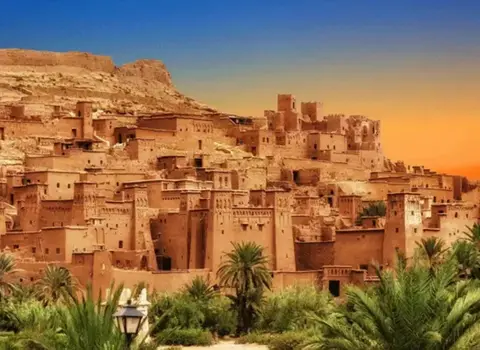
Starting in Casablanca, Rabat or Tangier, this route heads to Chefchaouen and Fes, crosses the Middle Atlas to Merzouga, then returns west through the Todra Gorge, the Dades Valley and Aït Ben Haddou to Marrakech. Our 10-day Morocco itinerary from Casablanca follows this pattern.
Marrakech to Fes across the desert
If you fly into Marrakech and out of Fes (or the reverse), a one-way trip over the High Atlas to the Sahara avoids doubling back. The 3-day desert tour from Marrakech to Fes is the shortest version; five days allows a gentler pace.
Marrakech-based trips
With Marrakech as a base you can add day trips to the Atlas Mountains, Essaouira or the Ourika Valley, and a desert round trip. This suits travellers with a return flight from Marrakech.
Step 5: Set a realistic budget
Your budget depends mainly on four things: the number of travellers, the season, the level of accommodation and whether you travel privately. Prices for private tours are usually quoted per person and fall as the group grows, because the vehicle and driver are shared between more people.
- Accommodation: from simple guesthouses and riads to boutique and luxury hotels.
- Desert camp: standard camps with shared facilities, or luxury camps with private tents and en-suite bathrooms.
- Meals: many tours include breakfast and dinner; lunches and drinks are usually extra.
- Extras: local guides in the medinas, entrance fees, tips and optional activities such as quad biking.
Our article on Morocco travel costs breaks down typical spending. Bring some cash in dirhams for small purchases, as card payment is still limited in souks and rural areas.
Step 6: Book – from enquiry to confirmed itinerary
Booking a tailored trip with a local company is straightforward. With Travel Tours Morocco it works in three stages.
- Enquiry: send your dates, number of travellers, arrival and departure cities and any interests through the website form, by email or on WhatsApp.
- Tailored quote: you receive a proposed itinerary with the accommodation level and an indicative price. You can ask for changes – an extra night, a different camp, a reversed route.
- Confirmation: once you are happy with the itinerary, it is confirmed and you receive the final details for your trip.
We run private and shared tours from many Moroccan cities, including Marrakech, Fes, Casablanca, Tangier and Agadir, with desert camps in Merzouga from standard to luxury. Custom itineraries are available on request.
Step 7: Practical preparation before you fly
- Passport and entry: many nationalities, including UK, EU, US, Canadian and Australian citizens, can visit visa-free for short stays, but rules change – check your government’s travel advice and make sure your passport is valid well beyond your return date.
- Travel insurance: choose a policy that covers medical care and any activities you plan, such as trekking or quad biking.
- Money: the Moroccan dirham (MAD) is a closed currency, so you normally exchange or withdraw it on arrival. ATMs are common in cities and towns.
- Connectivity: a local SIM or eSIM is inexpensive and useful for maps and WhatsApp.
- Clothing: pack light layers that cover shoulders and knees, plus warm layers for desert nights. See what to wear in Morocco.
It is also worth reading our honest guide on whether Morocco is safe to travel, and learning a few words of Arabic or French – a simple “salam” or “merci” goes a long way.
Frequently asked questions
How far in advance should I plan a trip to Morocco?
Two to three months ahead is comfortable for most trips. For spring, Easter, the Christmas period or late October, start planning earlier, because popular riads and luxury desert camps fill up. Shorter notice is often possible for private tours, but you will have more choice of accommodation if you allow time.
Is it better to fly into Marrakech or Casablanca?
It depends on your route. Marrakech is ideal if you want to start with the city and head over the High Atlas to the Sahara. Casablanca has the widest choice of long-haul flights and suits routes that begin with Rabat, Chefchaouen and Fes. Flying into one and out of another often saves time.
Can I visit the Sahara on a short trip?
Yes. Three days from Marrakech or Fes is the realistic minimum for a night in a Merzouga camp, with long drives on the first and last days. Two-day trips exist but involve very long driving. With four or five days, you can break the journey in the Dades Valley or Todra Gorge.
Do I need a guide in Moroccan cities?
You do not need one, but a licensed local guide makes the medinas of Fes and Marrakech much easier to understand and navigate. Half a day is usually enough for a first orientation. Many private itineraries include a guided city visit, which we confirm in your quote.
Can a tour be customised?
Yes. Private itineraries can be adjusted to your dates, pace and interests – adding nights, choosing a different camp level, reversing the route or including places such as Chefchaouen or Essaouira. Send your ideas with your enquiry and they will be reflected in a tailored quote.
Published · Updated