Practical tips
What to Pack for a Morocco Desert Tour
For a Morocco desert tour, pack loose, breathable layers that cover shoulders and knees, a warm fleece or jacket for the cold desert nights, a scarf for sun and sand, sunglasses, sunscreen, a head torch and a power bank. Keep everything for the camp night in a small soft bag, because your main luggage usually stays in the vehicle or at the hotel.
The basics: how to pack for the Sahara
Knowing what to pack for a Morocco desert tour comes down to three things: temperature swings, sand and the fact that you will be on the road for several days. Days in the desert can be hot even in winter, while nights cool quickly after sunset. Fine sand gets everywhere, and you will spend long hours in a vehicle between stops.
The good news is that you do not need specialist equipment. Camps provide beds and blankets, and a simple travel wardrobe built around layers will cover almost every situation.
Your camp-night bag
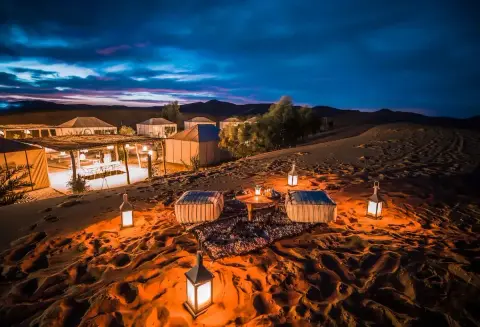
On most tours to Merzouga, you ride a camel to camp, so large suitcases stay behind – either locked in the vehicle or stored at a hotel on the edge of the dunes – and you carry only a small bag for the night. A soft daypack or a small duffel is easiest to strap to a camel or carry yourself.
- Warm layer: fleece, down jacket or thick jumper.
- Change of clothes for the next day and something comfortable to sleep in.
- Toiletries, wet wipes and hand sanitiser.
- Any medication you need.
- Head torch or small torch.
- Power bank and charging cable.
- Water bottle (camps usually have bottled water).
- Scarf or cheche, sunglasses and sunscreen for the morning ride.
This applies to the standard one-night camp on the Merzouga overnight desert camp as well as longer treks; on the three-night camel trek, keep your bag especially light.
What to wear in the desert by season
Weather varies from year to year, so treat these as typical conditions rather than guarantees. Our best time to visit Morocco guide has more detail by month.
| Season | Typical desert conditions | What to pack |
|---|---|---|
| Winter (Dec–Feb) | Mild, sunny days; cold nights, sometimes near freezing | Warm jacket, fleece, thermal top, hat, gloves, warm socks, long trousers |
| Spring (Mar–May) | Warm days; cool nights; occasional windy, sandy days | Light layers, fleece or light jacket, scarf for wind, sunglasses |
| Summer (Jun–Aug) | Very hot days, often 40 °C or more; warm nights | Loose long-sleeved cotton or linen, wide-brimmed hat, high-factor sunscreen, electrolytes |
| Autumn (Sep–Nov) | Hot to warm days; nights cooling through the season | Light clothing for day, fleece for evening; warmer layers from late October |
Remember that the drive to the desert crosses the High Atlas, where it can be much cooler than in Marrakech, especially in winter on the Tizi n’Tichka pass.
Clothing that respects local norms
Morocco is relaxed about what visitors wear, but outside the big cities, in villages and small towns along the desert route, modest clothing is appreciated. Covering shoulders and knees is a good default for both men and women, and loose clothing is also cooler in the sun.
- Long, loose trousers or a maxi skirt, and long shorts for men if you prefer.
- T-shirts and long-sleeved shirts in breathable fabrics.
- A light scarf that can cover shoulders or hair if you visit a religious site or a local home.
- Swimwear only at hotel pools, not in villages or at the gorges.
For more detail, including city clothing and what to wear in Fes and Marrakech, see our guide on what to wear in Morocco.
Shoes and accessories
- Comfortable trainers or walking shoes for the Todra Gorge and medina walks.
- Sandals or slip-on shoes for camp; sand is soft and many people walk barefoot on the dunes, but it can be very hot by day and cold at night.
- A cheche or large cotton scarf – your driver or camp team can show you how to tie it.
- Sunglasses with good UV protection.
- A hat with a brim for daytime stops.
Protecting your camera and phone from dust
Desert sand is extremely fine and finds its way into zips, lenses and charging ports, especially on windy days. A few simple precautions help a great deal.
- Keep phones and cameras in zip-lock bags when not in use.
- Avoid changing lenses on the dunes; choose one versatile lens for the day.
- Carry a blower and a microfibre cloth to clean lenses gently – do not wipe sand off with clothing.
- Bring spare batteries; cold nights drain them faster, and charging in camp may be limited.
- A small tripod or bean bag is useful for night-sky photographs.
Morocco desert tour packing checklist
Use this checklist as a starting point and adjust it for the season and length of your trip.
| Item | Main luggage | Camp bag | Notes |
|---|---|---|---|
| Passport and copies | Yes | Yes | Keep the original with you at all times |
| Cash in dirhams | Some | Some | For tips, drinks and small purchases |
| Light layers (T-shirts, long trousers) | Yes | One change | Cover shoulders and knees |
| Fleece or warm jacket | — | Yes | Essential October to April |
| Hat, gloves, warm socks | — | Winter | Nights can be near freezing |
| Scarf or cheche | — | Yes | Sun and sand protection |
| Sunglasses and sunscreen | — | Yes | Strong sun all year |
| Head torch | — | Yes | Camp paths are dark |
| Power bank and cables | — | Yes | Charging may be limited in camp |
| Toiletries, wet wipes, sanitiser | Yes | Small set | Travel sizes for the camp |
| Personal medication | Yes | Yes | Plus motion-sickness tablets for mountain roads |
| Reusable water bottle | — | Yes | Refill from bottled water |
| Comfortable walking shoes | Yes | Wear them | For gorges and medinas |
| Swimwear | Yes | — | For hotel pools only |
What you do not need to bring
There is no need to bring a sleeping bag for a standard or luxury camp near Merzouga, because beds and blankets are provided. Towels are usually available too, although a light travel towel is handy on a trek. Leave valuables you do not need at home, and avoid bringing large amounts of jewellery.
If you plan optional activities such as an ATV quad tour in Merzouga, closed shoes, sunglasses and a scarf over your nose and mouth are useful; any other equipment provided will be confirmed when you book.
Finally, pack a little patience for long drives, and leave some space in your bag: rugs, argan oil, spices and fossils from the route south have a way of finding their way home. For a feel of the full experience, read what to expect on a Sahara desert tour, and see trips such as the 3-day tour from Marrakech to Fes for a typical route.
Frequently asked questions
What should I wear on a camel ride in the Sahara?
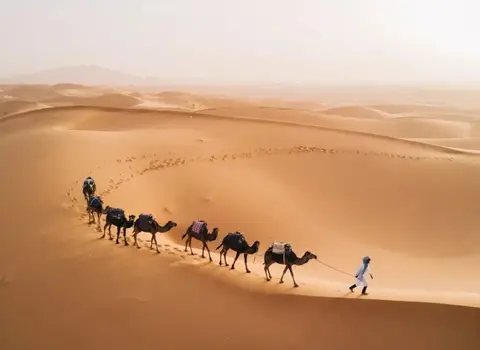
Wear long, loose trousers, a long-sleeved top and closed or secure shoes, with a scarf for your head and face. Long trousers prevent chafing on the saddle, while sleeves and a scarf protect you from sun and sand. In winter, add a warm jacket for the sunset and sunrise rides, when it can be cold.
Do I need to bring a sleeping bag to the desert camp?
No, not for standard or luxury camps near Merzouga, which provide beds and heavy blankets. On simpler multi-night treks, conditions are more basic, so ask when you book whether extra bedding is recommended. In winter, warm sleepwear and socks make the night more comfortable.
Can I take my suitcase to the desert camp?
Usually not on the camel ride. Large suitcases normally stay locked in the vehicle or stored at a hotel on the edge of the dunes, and you take a small overnight bag to camp. Pack it before you reach Merzouga so that you are ready to go when the camels arrive.
How cold is it at night in the Moroccan desert?
From November to March, desert nights are often cold and can approach freezing. Spring and autumn nights are cool, and summer nights are warm. Even when the day has been hot, bring at least a fleece for the evening and early-morning sunrise, when the temperature is at its lowest.
Should women cover up on a Morocco desert tour?
Covering shoulders and knees is recommended, especially in villages and small towns along the route. It is not a legal requirement, but it is respectful and comfortable in the sun. Loose trousers or long skirts, light long-sleeved tops and a scarf work well for most women travellers.
Published · Updated